I get it. I really do. Meetings have been the bane of my corporate existence too, for over twelve long years.
I wasn't used to being in meetings that were carefully crafted, intentional and set up for success. And so they were spaces that were chaotic, a waste of time for the most part, and just incredibly painful to go through.
Until that fateful day when I walked into the most productive AND fun meeting I ever had. We cracked jokes as we ran through dozens, DOZENS, of agenda items, finding effective solutions and next steps for each one. Did that meeting last for hours? No, it lasted for less than an hour, with all of us walking out with clear next steps.
That was the first meeting I attended in a self-managed company. And I've never gone back since.
Today, I’ll list the ingredients that made that meeting so effective so you can do it too.
Let's get into it.
The 8 commandments of a great meeting :
Know what type of meeting you’re calling people into : is this an operational meeting? A brainstorming meeting? A meeting where decisions need to be made? Knowing what you're walking into beforehand allows everyone to show up with the right mindset, energy and expectations.
Prepare an agenda and share it beforehand. If this is relevant, create a section in the agenda where team members can add the issues they'd like to discuss directly into the agenda.
If this is a regular meeting, always have the same meeting blocks, and run them in the same order. For example the order of an operational meeting can be : Check-in, KPI review, issues list, Check-out. This creates routine and decreases mental load since people aren’t guessing what’s coming next; they can then contribute (even subconsciously) to help pace the meeting.
Get people to update all KPIs or numbers before the meeting so you’re not losing time during the meeting, and can then spend that time commenting on said KPI instead of updating it in the tracking sheet or wherever you’re tracking metrics.
Self-organised businesses have a meeting facilitator and a secretary. This, honestly, is the game changer (you can formalise those roles in rolebase). A great facilitator paces the meeting, distributes speaking time to people, cuts people off respectfully if they’re taking too long. The facilitator is a team member herself, but ideally shouldn’t be the team leader if you’re mindful about not concentrating too much power in one person. Each team member can even take turns at facilitating team meetings every few months so things can be more balanced.
ALWAYS have a next-step for each issue, with a clear owner. This is the secretary’s role. That role isn’t here to document everything, but to ensure that next steps exist and are attributed. They’ll also note down other important things like decisions that have been made so a trace of it exists.
This should go without saying, but run meetings on time and don’t overrun. This is also the facilitator's role. It is best practice for the facilitator to also priorise the issues list, with input from team members, so all important issues are tackled first within the time alloted.
Have a little check-in and check-out at the start and end of each meeting to understand the state in which people are as they show up, and what they're leaving the meeting with. This creates empathy within the team and promotes deeper understanding. It can be quick sentences like 'I'm not in the best shape today as the baby kept me up all night yesterday', or, at the end, 'I'm not clear how I'll implement X so I might reach out to A and B'.
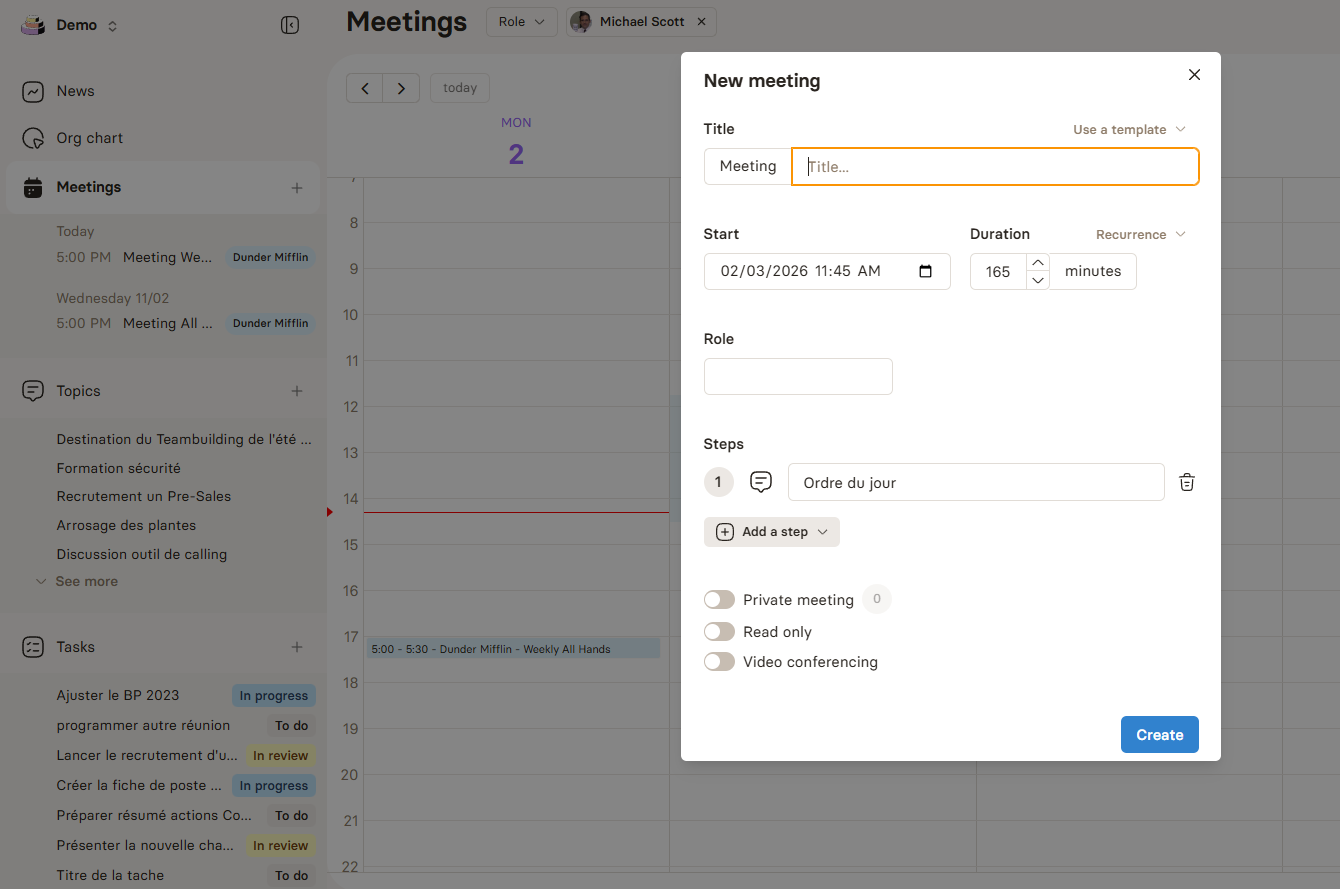
This might be a lot, so don’t try to implement all of them at once. The video below shows how Rolebase can help you set up and run the most efficient meetings you've ever seen :)
If you're interested in seeing how Rolebase can be tailored to your business, go ahead a book a demo here, we'd love to hear from you !